Beats: Narratives & Models
Storytelling in Residence to Frontier Research & Startups
The Beat Room is where I write it down, one essay at a time.
The Beat Room is my newsletter on storytelling, AI and venture. Newest first. It also goes out on LinkedIn.
-
No. 08
What a Meta Paper Taught Me About Giving Story Notes
I read a machine learning paper I was not supposed to understand, and halfway through I realised it was about giving notes.
-
No. 07
What Is a Storytelling Intelligence Lab? A Primer
Companies are now built on belief before revenue. In that world, storytelling is not marketing. It is infrastructure.
-
No. 06
Frontier Storytelling Lessons I Took From the Anthropic S-1
The S-1 offers a lot of perspective on how frontier storytelling needs to be done to get the world to buy into the Frontier.
-
No. 05
Finite Media: You Cannot Feel Anything for Free.
The next decade of media will be built on everything the internet spent twenty years deleting.
-
No. 04
In India, New Media is Subculture Media
In San Francisco, tech is the culture. In India, entrepreneurship is. Mix them up, and you build the wrong media strategy.
-
No. 03
Join the BeatLib Project: a skill library for storytelling to help deeply technical founders
An LLM will write you a thousand stories a minute. They will all sound the same.
-
No. 02
Understanding Taste
To develop it in the age of AI slop. Creating has become almost instant. Judging what's good has not.
-
No. 01
Storytelling Engineering: Why the story is the spec
AI made structure easy to create, but meaning is still hard to achieve. The rare skill is creating meaning intentionally, as part of engineering.


This is the work.
Micro documentary
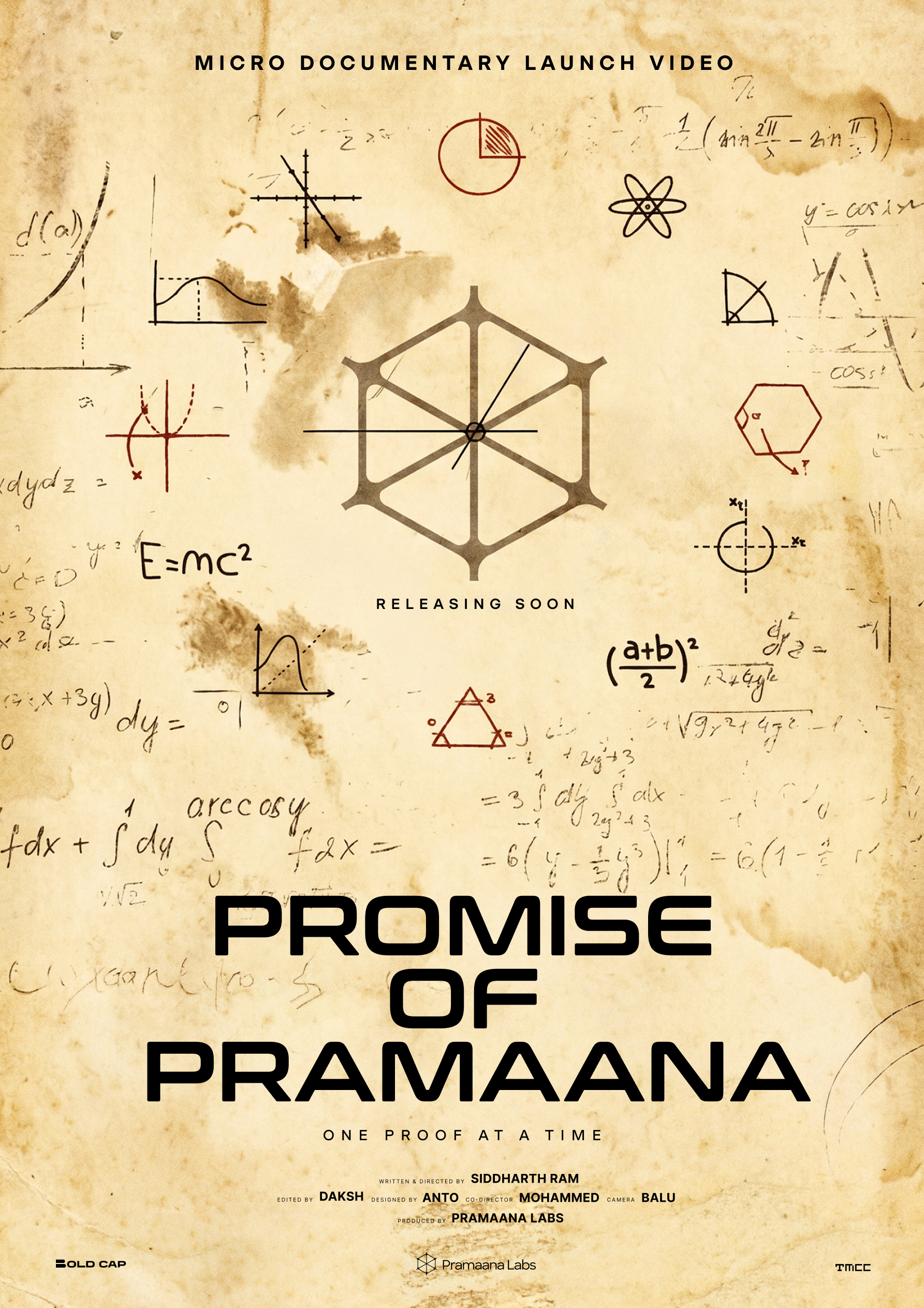
Promise of Pramaana
One Proof at a Time. about 5 minutes, 2026.
A micro documentary on the meeting of ancient mathematical wisdom and modern computational proof systems, following Pramaana Labs as they turn centuries of knowledge into verifiable frameworks.
Co-director Mohammed
Edited by Daksh
Designed by Anto
Camera Balu
Produced by Pramaana Labs
Videos
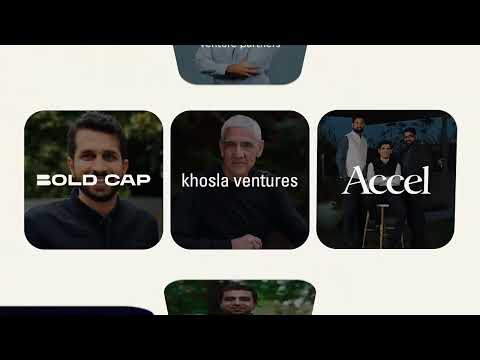 Pramaana Launch VideoPramaana Labs, 2026
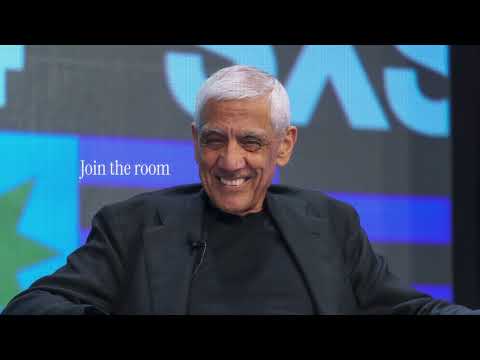 Verification Summit filmPramaana Labs and BoldCap, San Francisco, 2026
 Maximor Launch VideoMaximor, now Hyphenate, 2026
 Maximor Funding AnnouncementMaximor, now Hyphenate, 2026
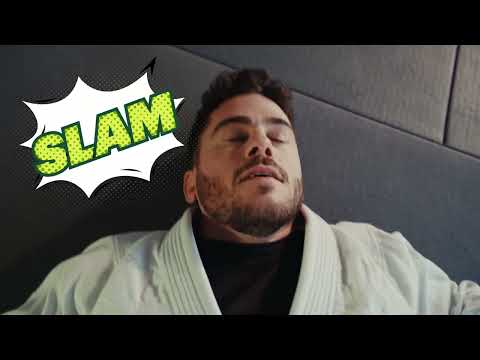 Maximor Close Campaign AdMaximor, now Hyphenate, 2026
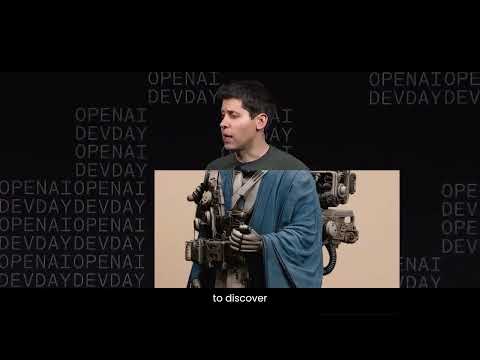 OpenAI Demo Party x BoldCapBoldCap, 2026
 Thumbs UpItihasa, 2025
Events and rooms
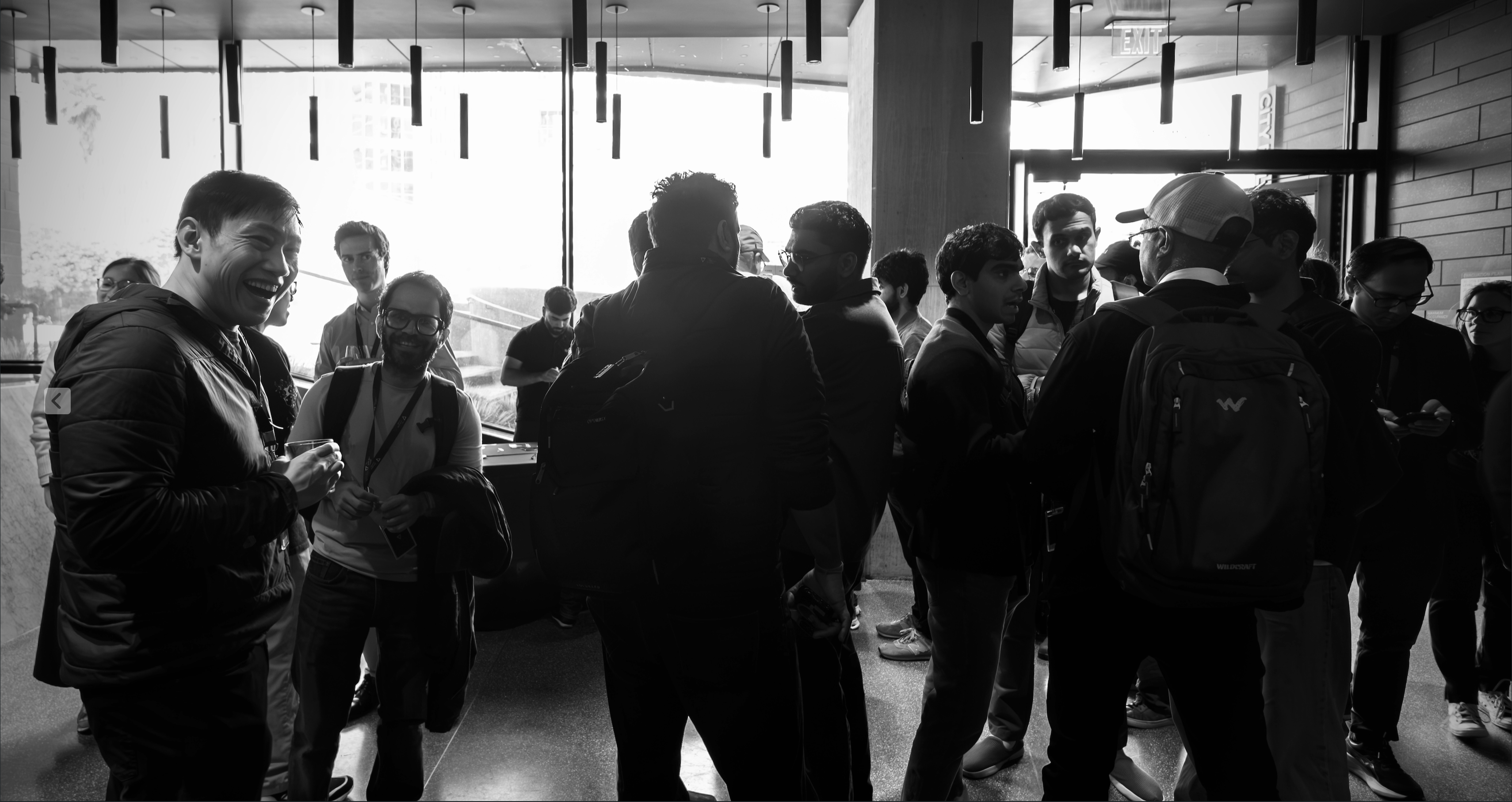
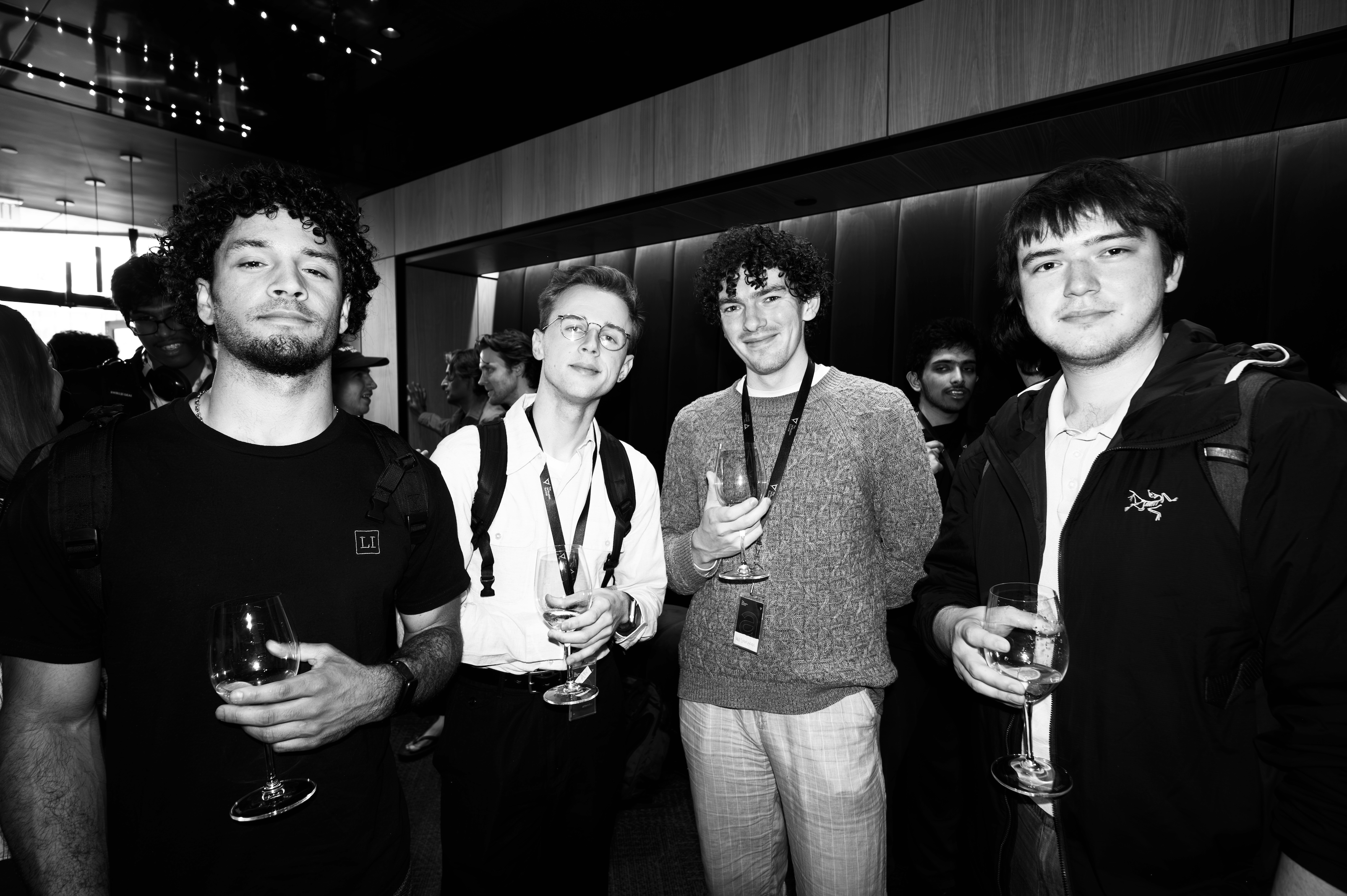
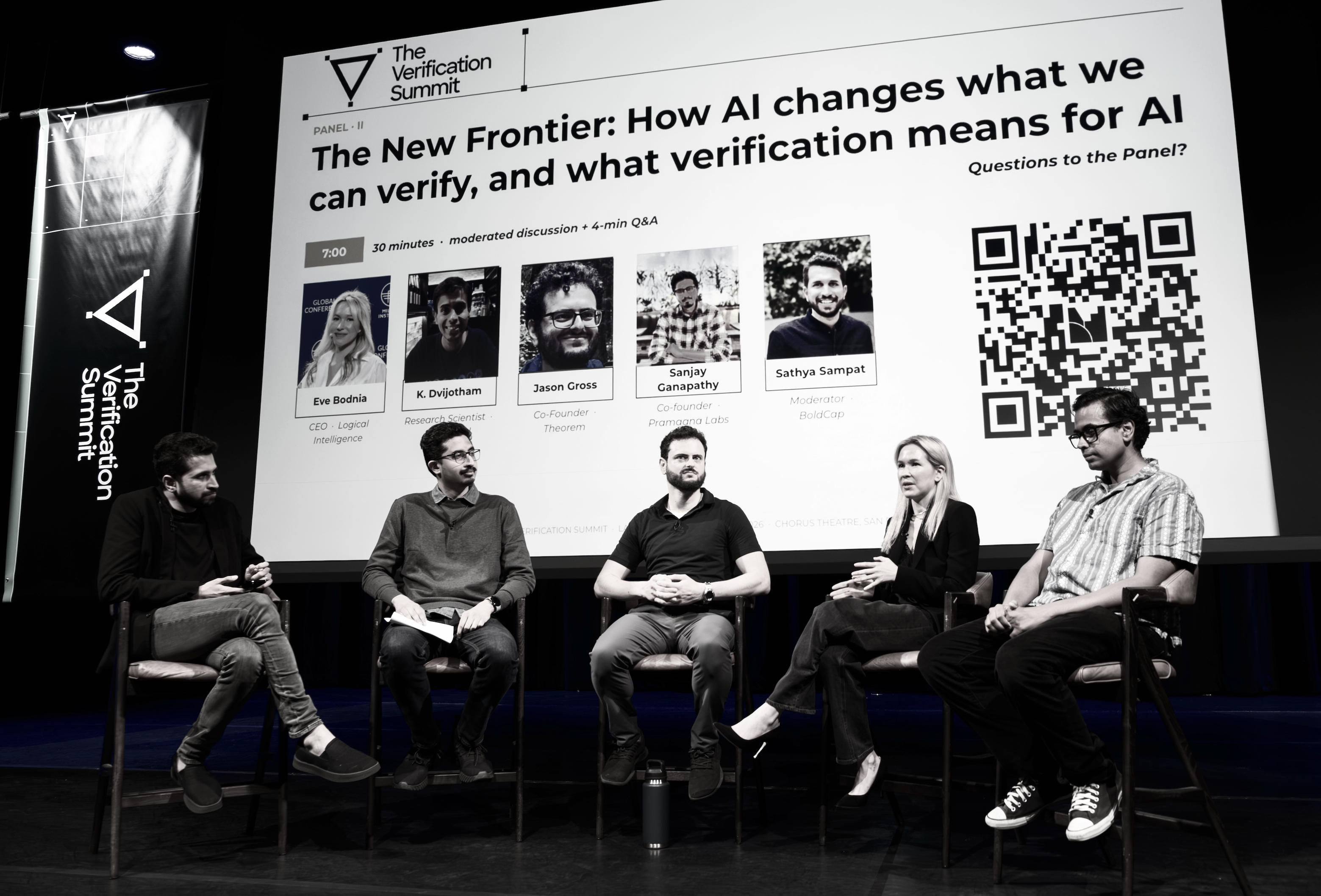
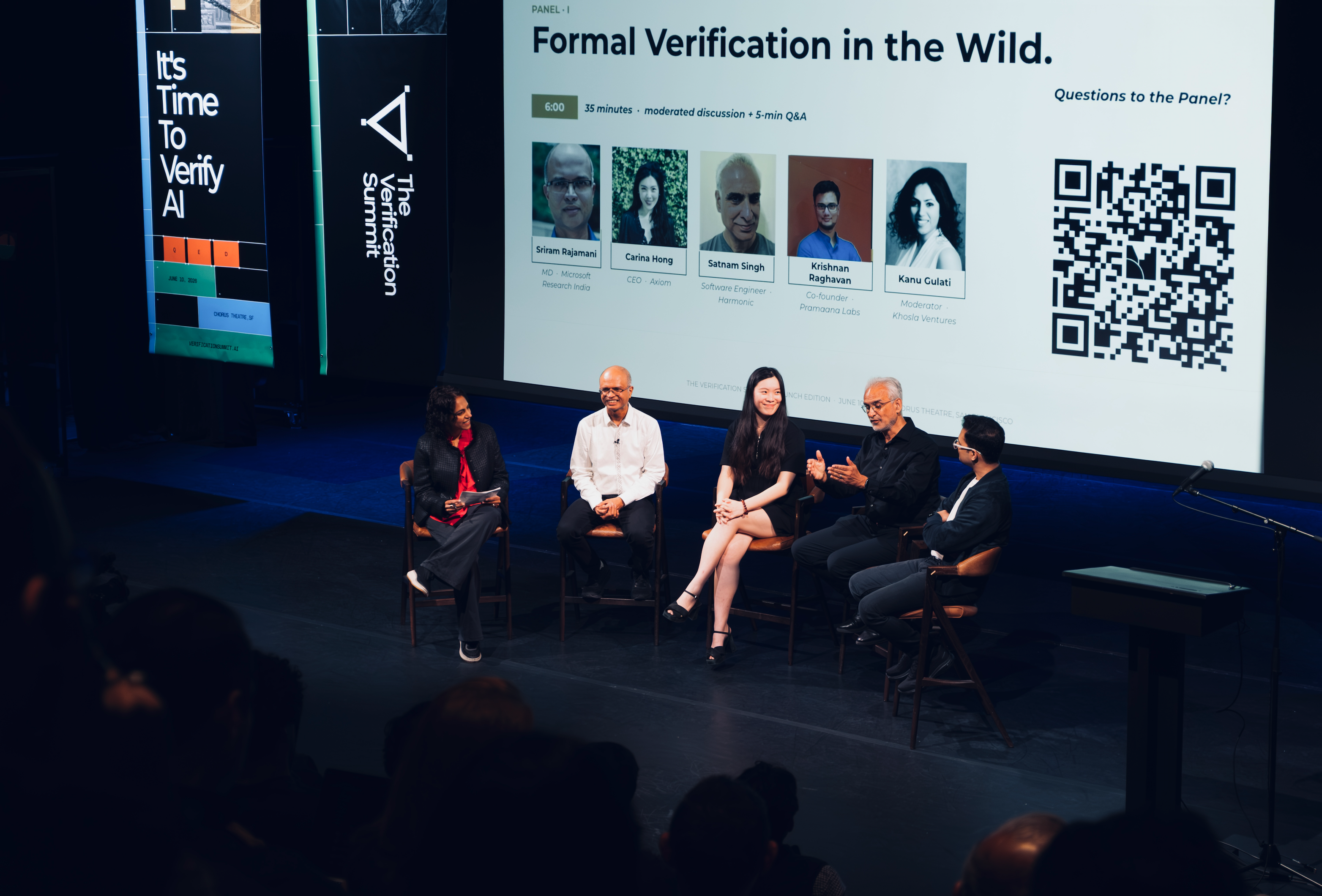
Verification Summit, inaugural edition
San Francisco, June 2026The first Verification Summit, anchored by Vinod Khosla. I built the storytelling around it, including the film made for the room, AI Stops Saying Sorry.
Watch AI Stops Saying Sorry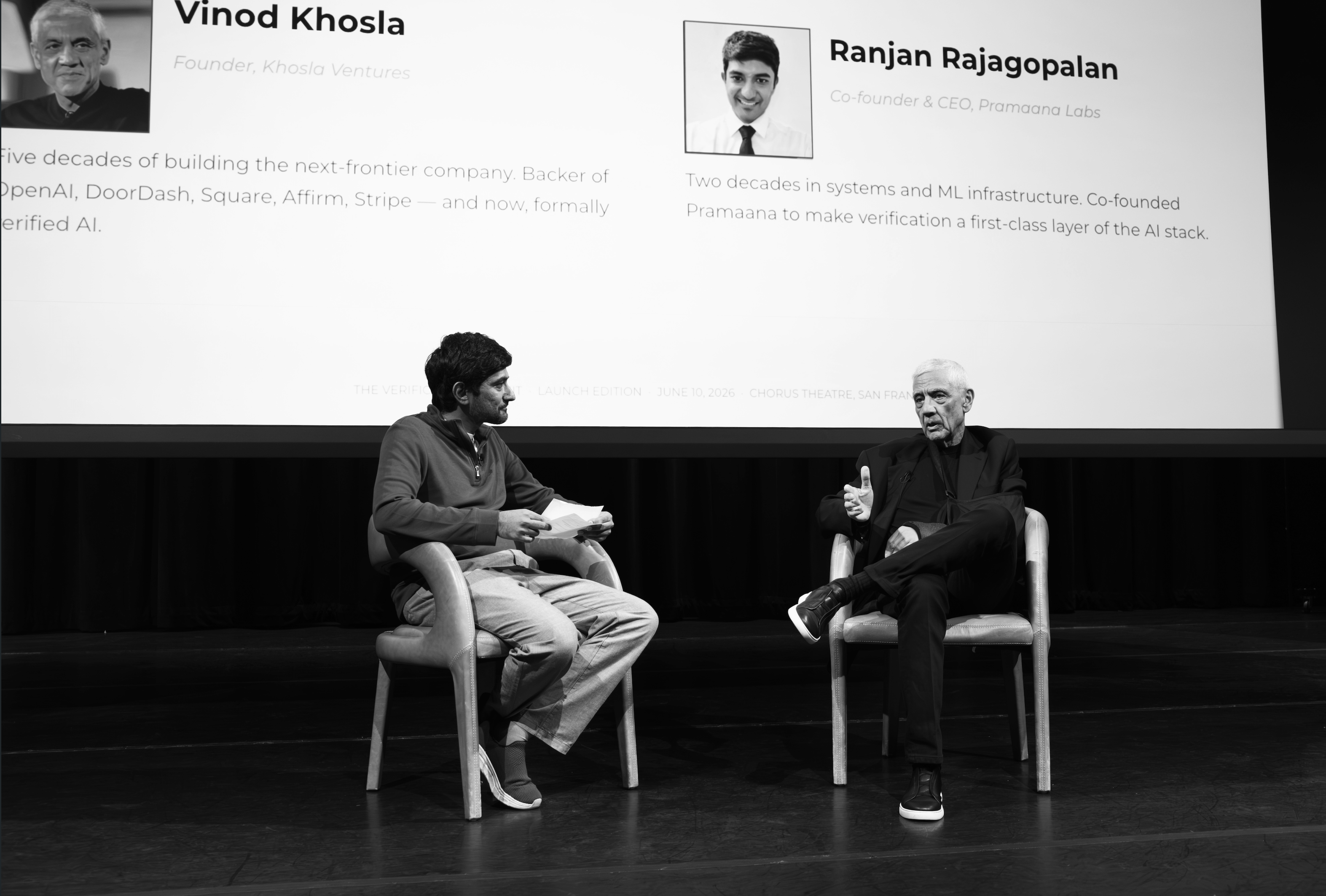
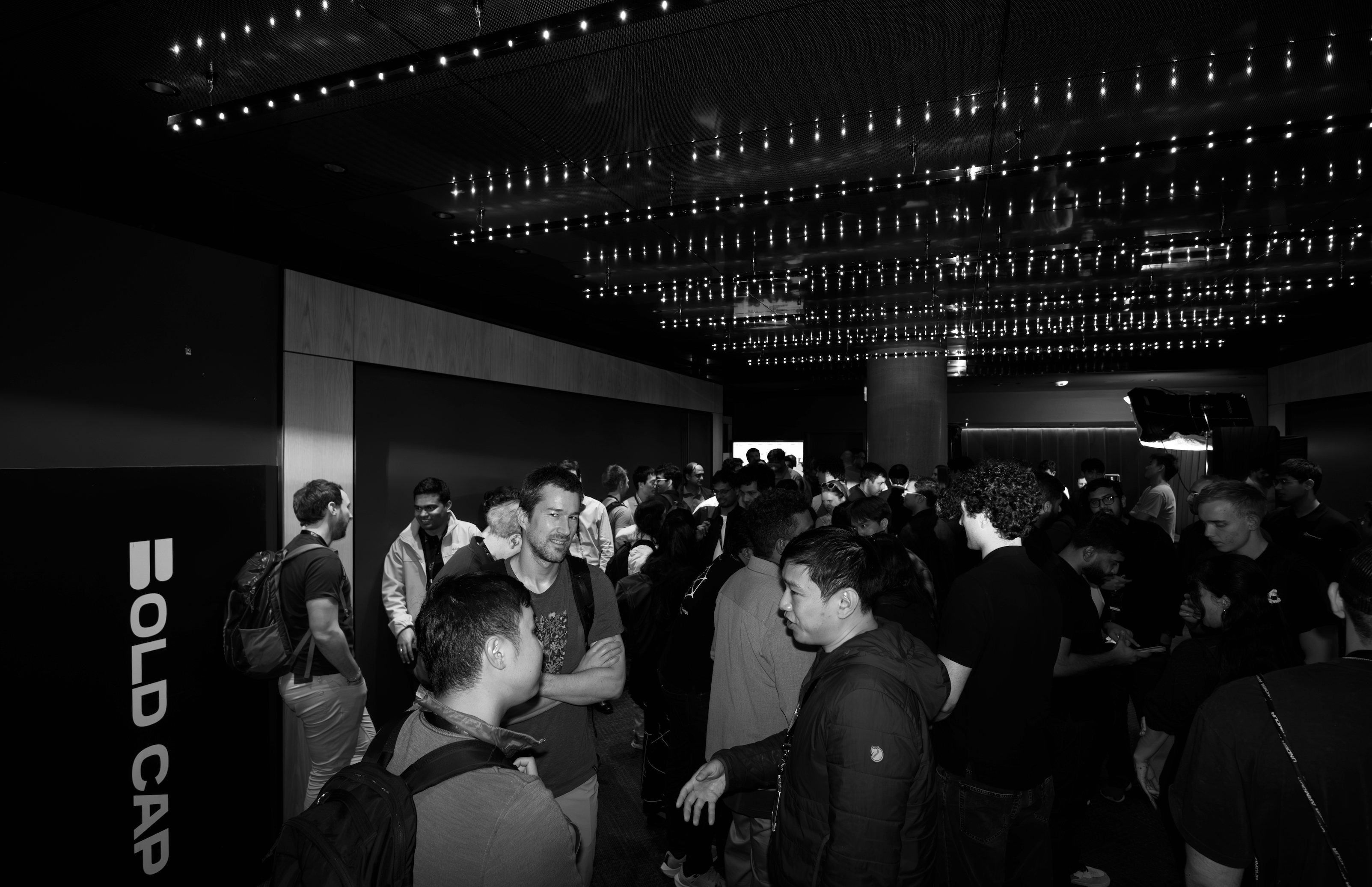
Follow The Frontier
Bangalore, Fridays, November to December 2026BoldCap's invite-only series that brings researchers and builders into one room to follow what is actually moving at the frontier.
OpenAI Demo Party x BoldCap
Bangalore, 2026A demo party for builders rather than a conference. The film from the night is in the videos above.
Websites and brands
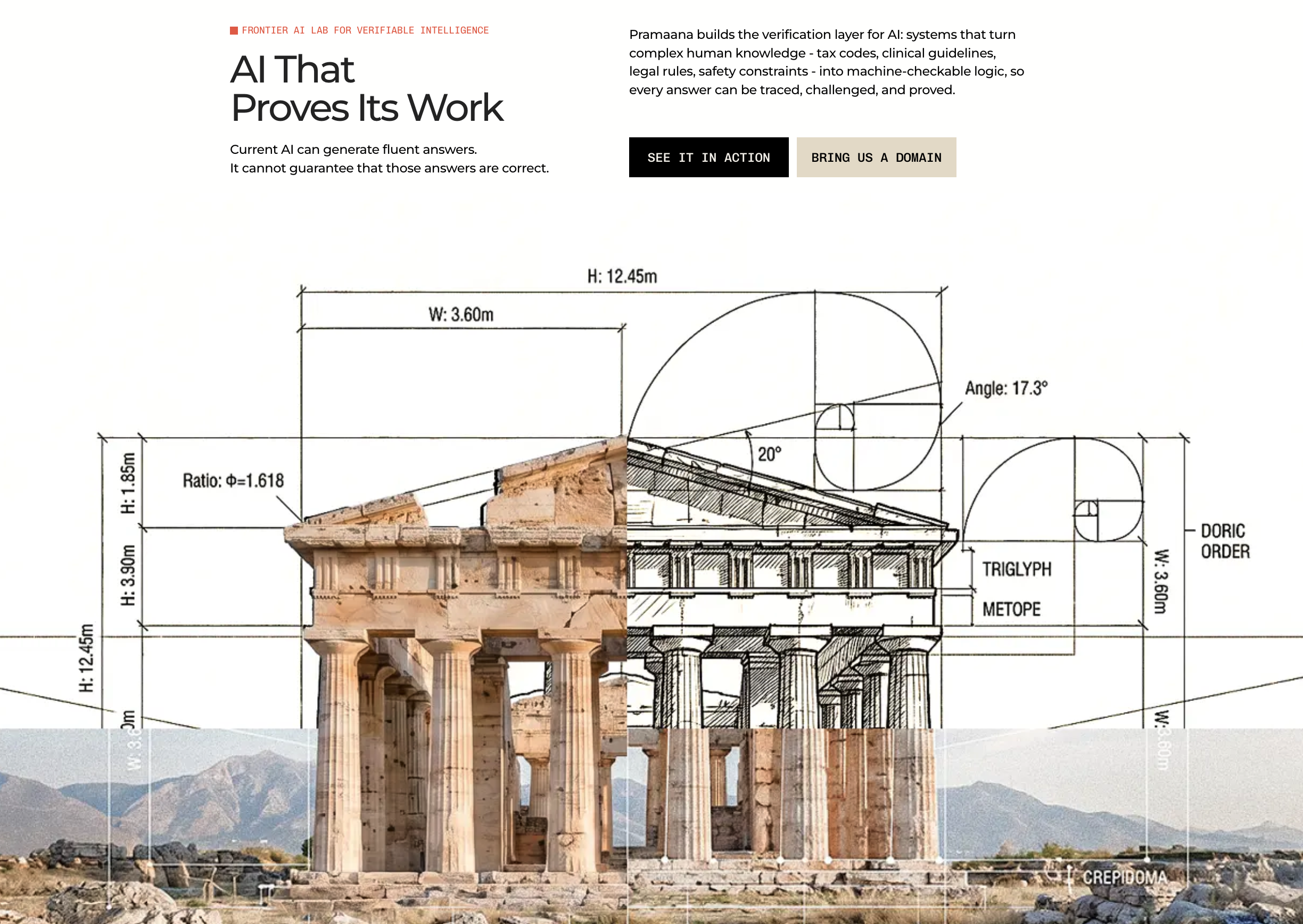
Pramaana Labs
Website design and brand storytelling for an AI verification lab. The brand had to make formal proof feel like trust, not like mathematics.
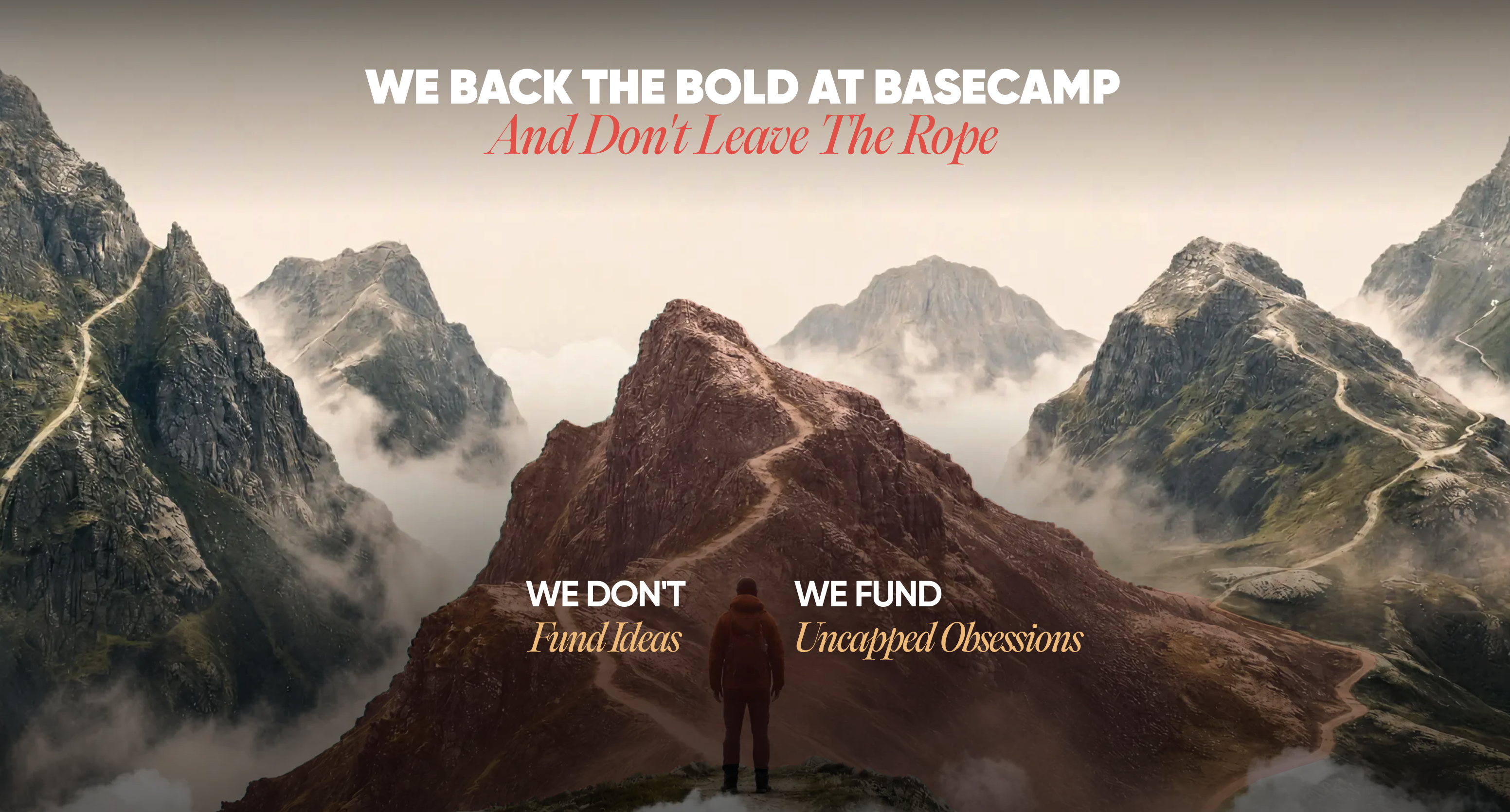
BoldCap
Brand identity, website and narrative strategy for the fund I work at. The thesis on the site is written the way the partners talk.
Shows
Attention Is All You Need
YouTube, in productionA solo essay-film show about the gap between frontier AI and the culture it lands in. Episode one is the manifesto; episode two is on the future of fashion.
Research work
BeatLib, the retelling benchmark, Beatcode and the rest of the RLNR program are in the research section, with their status.
Civilisations are built on innovations and narratives.
01Innovation changes what is possible. Narrative changes what people believe. The greatest problems in the world get solved where the two meet.
02Religions were the first media companies. A text, a programme of practice, and a community bound by one story, carried across centuries by believers who became evangelists. No distribution deal has ever matched it.
03A frontier lab or startup is a mission in search of believers. My work is to give a mission its text, its practice and its community, so the people who understand it become the people who carry it.
As a Storyteller-in-Residence, I work with your firm in three ways.
01Writing Room. Your team and I form a writing room to engineer the firm's narratives and push them out, directly or through PR. I own it and I drive it.
02Programs. I structure programs that build a community of practice around your firm, so the people who should believe in the work have a place to gather around it.
03New Media. If you want to go beyond narratives and build a media house of your own, I put it together: newsletters, podcasts, documentaries, shows and events.
I take a few residencies a year, usually by introduction. Write to me.
I am learning by research, and this is what I am working through right now.
This is personal research, not a lab programme. I am a storyteller learning how models are trained to write, and the question I keep returning to is whether story structure can be checked the way code is checked. I call that idea RLNR, reinforcement learning from narrative rewards, and these are the threads I am pulling on.
Fig. 1. The RLNR loop as I currently understand it. The verifier's share is the part a storyteller can make checkable, so that is where I am looking.
-
Retelling fidelity as a benchmark
A story that works survives retelling. I am testing this by having models retell a story and checking which beats, value shifts and claims survive, against a beat graph I draw by hand first.
trying now · a hand-run experiment, no GPUs needed -
Beatcode
Reinforcement learning on storytelling by making a model write a real story language, ink, so that compile success, branch reachability and declared value shifts become verifiable rewards alongside a judge. The question is whether you can code a story rather than generate one.
sketching · a small open model, modest compute -
Story as spec for agents
The Storytelling Engineering question, made testable: do agents that receive a narrative brief keep the intent across handoffs better than agents that receive a specification? If they do, storytelling is an alignment tool, not a marketing one.
thinking about · the question labs would care about -
BeatLib benchmarks
A skill has no benchmark of its own, so I measure the lift it gives a fixed base model on a fixed rubric, on briefs it has never seen. Constraint satisfaction today; a slop floor, a faithfulness check and a calibrated judge next.
ongoing · in the open on GitHub -
Autoformalising rule books
What happens when a story rule book, the Ramayana or a constitution is formalised well enough for a machine to check a draft against it. This is where formal methods and story meet, and where the Natya Shastra's rasa becomes a typed vocabulary instead of a metaphor.
exploring
These are the papers I am reading, with the note I took on each.
First sweep, November 2026, added to monthly. The note is mine, not the abstract.
-
arXiv:2602.05125
Rethinking Rubric Generation for LLM Judges and Reward Models
Shen et al., Meta, Feb 2026
The paper that gave me RLNR. It splits vague criteria until they bite and fires the ones that reward the weaker draft. Every writers' room does this; now it is a training signal.
-
arXiv:2601.17226
Retell, Reward, Repeat
Liu, Muston, Srirag, Joshi, 2026
The only paper so far that put a narratology book (Todorov) into the reward. Closest thing to my retelling test, and the first I will try to beat.
-
ICLR 2026
StoryAlign: Evaluating and Training Reward Models for Story Generation
Xia, Peng et al., Tsinghua
Finds that reward models prefer machine-written stories to human ones. That bias is the whole problem in one table.
-
EACL 2026
LitBench
Fein, Russo, Xiang et al., Stanford
The reference dataset. The best judge agrees with humans 73 percent of the time; the gap is where structure has to do the work.
-
CHI 2024
Art or Artifice? The Torrance Test of Creative Writing
Chakrabarty et al.
Fourteen tests written with expert writers. Model stories passed three to ten times fewer of them. Read it as a craftsperson, not as a benchmark.
-
arXiv:2606.04095
POLARIS: Guiding Small Models to Write Long Stories
2026
A 9B model, four A100s, competitive long fiction. The budget that makes Beatcode possible on a residency's income.
-
ICML 2026
Rubric Curriculum RL
2026
A moving rubric is harder to hack than a fixed one. Useful for anyone who has watched a writer learn to game the note.
-
AAAI 2026
RLMR: Reinforcement Learning with Mixed Rewards
2026
Half the reward is a judge, half is a verifier, and the mix moves per sample. The closest existing design to the one I want to build.
-
ICML 2026
NCP-Bench: Narrative Commitment Preservation
2026
Checks an interactive story turn by turn against a ledger of facts and commitments. A commitment ledger is a beat graph by another name.
-
arXiv:2605.27878
Narrative Flattening
Li, Zhu, Wu, Bao, Evans, Chicago
Measures how post-training compresses stories toward one mundane regime. The scientific version of what I called slop in Understanding Taste.
I am a failed founder and a failed filmmaker, and blending the two became my job.
I live in two worlds. One is frontier AI, which I see every week through the fund. The other is culture: cinema, the internet, my own family. Beats is about the gap between them.
Where AI is going is knowable if you pay attention. Where people are going is the mystery, and that is what I chase.
I write in the first person and I am not neutral. I work in venture and I am betting my own time on this.
I take a few residencies a year, usually by introduction. If you are building something at the frontier and want to talk, write to stories@itihasa.co, or find me on X and LinkedIn.